You’ll love these three Angola-inspired nail designs that blend African heritage with modern style. First, create vibrant Kente-inspired geometric patterns using electric blue, sunshine yellow, and emerald green with bold black outlines. Next, try earth-toned ombré gradients featuring traditional Angolan symbols and tribal silhouettes in terracotta and ochre shades. Finally, embrace minimalist Capulana motifs with delicate dotwork and simplified diamond patterns against nude polish. These techniques transform your nails into wearable art celebrating Angola’s textile traditions.
Key Takeaways
- Geometric Kente-inspired patterns feature electric blue, sunshine yellow, and emerald green blocks outlined with black for vibrant Angolan cultural representation.
- Earth-toned ombré nails transition from terracotta to sand, adorned with tribal silhouettes and simplified Tchokwe geometric patterns.
- Modern minimalist Capulana motifs use fine-line diamonds or zigzags against nude polish for sophisticated negative-space effects.
- High-contrast colorblocking pairs unconventional combinations like orange with purple against neutral bases for bold visual impact.
- Essential tools include striping tape, detail brushes, and stamping plates for precise recreation of traditional Angolan symbols.
Geometric Kente-Inspired Patterns With Bold Color Blocking
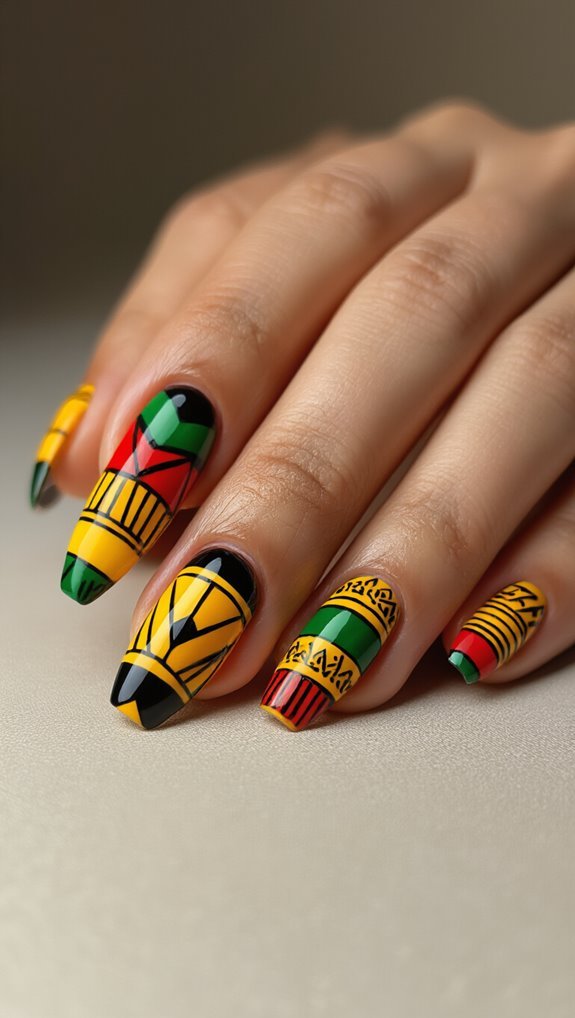
When you’re ready to embrace Angola’s rich textile heritage on your nails, geometric Kente-inspired patterns offer a striking way to showcase cultural artistry through bold color blocking. You’ll find that Kente geometry translates beautifully onto nail surfaces, creating eye-catching designs that command attention.
Start with a white or neutral base coat to make your colors pop. Then, use striping tape to section off angular shapes across each nail. Apply vibrant hues like electric blue, sunshine yellow, and emerald green in alternating blocks. You can create diagonal splits, zigzag patterns, or interlocking rectangles that mirror traditional Kente cloth motifs.
Bold colorblocking works best when you commit to high-contrast combinations. Don’t shy away from pairing orange with purple or red with turquoise. For added dimension, outline each geometric section with thin black lines using a detail brush. Seal everything with a glossy top coat to enhance the vibrancy and ensure your design lasts.
Earth-Toned Ombré Designs Featuring Traditional Angolan Symbols
While bold colors have their place in Angolan nail art, earth-toned ombré designs offer a sophisticated canvas for showcasing traditional symbols like the Pensador statue or Tchokwe masks. You’ll find these muted gradients create depth without overwhelming the intricate details of cultural motifs.
Start with a base that transitions from deep terracotta to soft sand or from rich ochre to pale amber. Once you’ve perfected your gradient, add tribal silhouettes using a thin brush and black or dark brown polish. You can recreate simplified versions of Tchokwe geometric patterns on accent nails or paint delicate outlines of traditional baskets and pottery designs.
For precision, use nail stencils or stamping plates featuring Angolan symbols. Apply a matte top coat to enhance the earthen aesthetic, or leave select symbols glossy for dimension. These designs work beautifully for both everyday wear and special occasions, connecting you to Angola’s artistic heritage.
Modern Minimalist Takes on Classic Capulana Textile Motifs
Capulana’s vibrant textile patterns translate beautifully into nail art when you strip them down to their geometric essence. You’ll find that traditional capulana motifs become strikingly modern when you reimagine them with negative space techniques. Start by selecting one dominant pattern element—perhaps a diamond or zigzag—and paint it using a fine line brush in black or deep brown against nude polish.
You can recreate textile texture through delicate dotwork or thin parallel lines that mimic woven fabric. Try placing a single geometric shape on your accent nail while keeping others bare with just a clear coat. This approach lets the design breathe without overwhelming your look.
For best results, you’ll want to use striping tape to achieve crisp edges and a detail brush for intricate work. Consider incorporating metallic accents sparingly—a single gold line can elevate the entire design while maintaining that minimalist aesthetic you’re after.
Frequently Asked Questions
How Long Do Angola-Inspired Nail Art Designs Typically Last?
Your Angola-inspired nail art designs typically last 7-14 days with proper care.
You’ll extend wear time by applying a quality top coat every 2-3 days and wearing gloves during cleaning.
Seasonal variations affect longevity—summer’s humidity may reduce durability while winter’s dryness helps designs last longer.
For removal methods, you’ll want to soak nails in acetone for 10-15 minutes.
Following these maintenance tips ensures your intricate designs stay vibrant longer.
What Tools Do I Need to Create These Designs at Home?
You’ll need several essential tools to create Angola-inspired nail designs at home. Start with dotting tools for creating perfect circles and geometric patterns that’re common in Angolan art.
Striping brushes help you paint thin, precise lines for intricate details. You’ll also want nail art pens, small detail brushes, and a steady hand. Don’t forget base and top coats, plus vibrant nail polishes in yellows, reds, and blacks to capture authentic Angolan colors.
How Much Does Professional Angola Nail Art Cost at Salons?
You’ll typically pay $30-80 for professional Angola nail art depending on salon pricing and complexity.
Basic designs start around $30-40, while intricate patterns with multiple colors reach $60-80.
Service tiers often include simple, delicate, or premium options.
Add on charges apply for extras like gems, foils, or 3D elements ($5-15 each).
You can find discount options through first-time client deals, package bundles, or seasonal promotions that’ll save 15-25%.
Can These Designs Work on Short or Natural Nails?
Yes, you’ll find these designs work beautifully on short nails and natural nails. You don’t need extensions to rock Angola-inspired patterns.
Geometric shapes, minimalist lines, and color blocking actually look stunning on shorter lengths. Your natural nails provide the perfect canvas for tribal prints and abstract designs.
You can scale down intricate patterns or focus on accent nails. Short nails showcase bold colors and simple motifs exceptionally well.
Which Nail Polish Brands Offer the Best African-Inspired Color Collections?
You’ll find excellent African-inspired collections from brands like OPI’s Africa collection and Zoya’s earthy ranges.
Look for bold pigments that capture the continent’s essence – think rich browns, deep oranges, and golden yellows.
Many indie brands specialize in tribal palettes featuring authentic cultural shades.
You can create stunning sunset gradients using brands like Essie’s desert-inspired lines.
Don’t overlook vibrant mattes from Black-owned companies like Pear Nova, which celebrate African heritage beautifully.
Conclusion
You’ve now got three stunning ways to celebrate Angolan culture right at your fingertips. Whether you’re drawn to the vibrant geometry of Kente patterns, the earthy elegance of traditional symbols, or the sleek simplicity of Capulana-inspired designs, you’ll make a statement that’s both fashionable and meaningful. Don’t be afraid to mix techniques or add your own twist. Grab your polish, pick your favorite design, and let your nails tell a beautiful cultural story.